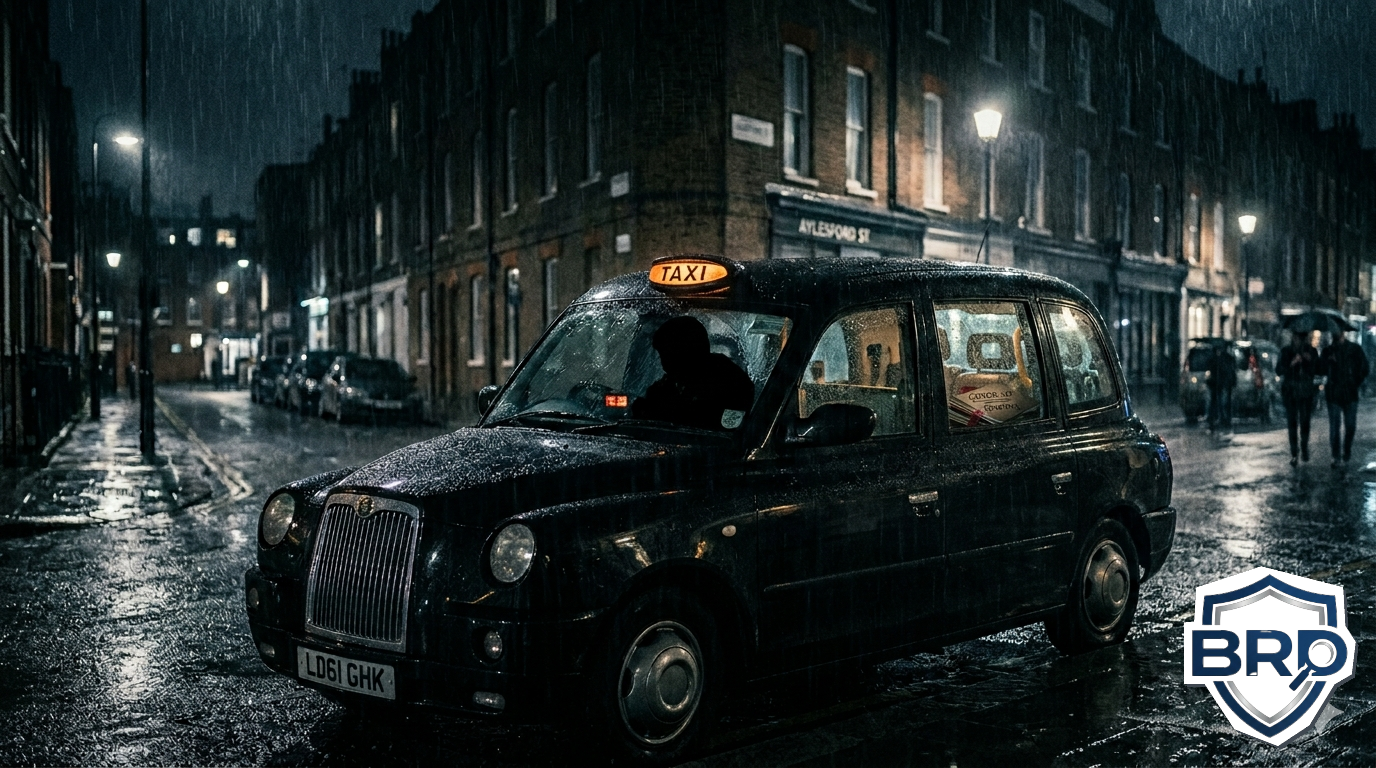
EXPOSED: The Anatomy of a Police Cover-Up – Did the 'Black Cab Rapist' Have Over 1,000 Victims?
The May 2026 broadcast of the ITV true-crime drama Believe Me has catalysed a renewed, furious public reckoning regarding the Metropolitan Police Service’s handling of one of the most prolific serial sex offenders in British history. Coinciding with the Parole Board's recent refusal to release John Worboys, the testimony of Carrie Johnson (formerly Symonds) on Good Morning Britain has brought a terrifying hypothesis into the mainstream: could Worboys' true victim count, spanning from 2000 to his ultimate conviction in 2009, comfortably exceed 1,000 women?
This staggering figure is not merely the result of a cunning predator’s evasion; it is the mathematical consequence of a catastrophic institutional failure. Worboys, a licensed London Hackney Carriage driver, weaponised his state-sanctioned position of trust, using a calculated "kit bag" of Tesco champagne and spirits laced with sedatives to incapacitate his passengers.
However, the true enabler of his decade-long rampage was not his own ingenuity. It was the Metropolitan Police Service (MPS). Through a toxic synthesis of victim-blaming, statistical gerrymandering, operational incompetence, and institutional gaslighting, the state effectively granted Worboys impunity.
In this exclusive BRD Investigations long-read, we forensically dissect the administrative blockages, "no-criming" policies, bureaucratic cover-ups, and shocking legal battles that defined the Worboys case. By bypassing superficial mainstream narratives, we lay bare the absolute corruption that allowed an active serial predator to operate on an industrial scale, exposing the terrifying mechanisms public bodies use to shield themselves from accountability.
1. The Logistical Anatomy of Systemic Corruption (2000–2008)
The failure to apprehend John Worboys was not an isolated operational oversight but a sustained, multi-year collapse of basic policing protocols. A forensic examination of the timeline reveals that the Metropolitan Police possessed actionable intelligence, direct victim testimonies, and physical evidence years before his final arrest. The logistical anatomy of this failure reveals a police force utterly detached from its duty to protect the public.
The 2003 Failure: The Case of "Sarah" (DSD)
The institutional gaslighting of victims began at the very inception of Worboys' known offending timeline. On 7 May 2003, at approximately 3:00 AM, a young woman, anonymised in legal proceedings as "DSD" (dramatised as "Sarah" in Believe Me), was picked up by Worboys. After consuming a laced drink offered under the guise of a "casino win" celebration, she became severely incapacitated.
A crucial intervention was made by an independent witness, identified in court documents as "Kevin." He discovered DSD slumped on the floor of the taxi, completely covered in her own vomit, and slurring her words uncontrollably. Deeply concerned for her safety, Kevin instructed Worboys to drive to Holloway Police Station and physically accompanied them to ensure the vulnerable woman arrived safely. They arrived at 4:33 AM.
What occurred at the front desk of Holloway Police Station epitomises the institutional misogyny of the era. Despite arriving in a suspect vehicle, severely incapacitated, and accompanied by a heroic independent witness, front desk officers failed to treat DSD as the victim of a crime. She was immediately mischaracterised as merely drunk, a drug addict, or both. The subsequent investigation was plagued by catastrophic errors:
- Failure to Record: Front desk reception staff failed to record relevant facts about the incident, the driver, and the condition of the victim.
- Discarding the Hero: Inexplicably, the police failed to formally interview Kevin or retain his contact details, tossing away the testimony of the man who had effectively delivered a serial rapist to the station doors.
- Evidentiary Negligence: Officers completely failed to collect relevant CCTV evidence from the route or the police station itself, and failed to secure vital forensic exhibits from the cab.
- Unacceptable Delays: It took nearly three weeks (until 29 May 2003) for a statement to even be taken from the officer who had been on duty when DSD was brought to Holloway.
Despite DSD explicitly telephoning the police to complain she was being ignored, and warning them that Worboys would strike again, the investigation was prematurely closed in February 2004.
The Informational Void and Missed Linkages (2004–2007)
Following the closure of DSD’s case, the MPS entered a period of wilful institutional blindness. Official records confirm a cascade of further reports of sexual assaults by a black cab driver operating with an identical modus operandi:
- July 2004: A 30-year-old woman informs Hackney police she woke in bed with no underwear after a cab ride.
- 16 June 2005: A further complaint matching the exact Worboys methodology is lodged.
- 28 April 2006: Another victim comes forward reporting a drugged assault in a black cab.
- 11 August & 14 October 2006: Two more distinct, matching assaults are reported to the MPS.
Because of severe deficiencies in intelligence gathering and database management, the MPS failed to link any of these complaints. Mr Justice Green later noted in the High Court that "no one who gave evidence in the trial could provide any form of adequate or sensible explanation for the failure to spot these linkages much earlier".
The July 2007 Failure: The Case of "Laila" (NBV)
The systemic rot culminated in the handling of the assault on "NBV" (dramatised as "Laila") in July 2007. After Carrie Symonds managed to escape Worboys' cab, he drove to Covent Garden and picked up NBV, a 19-year-old university student. Worboys forced a pill into her mouth; she lost consciousness and was sexually assaulted.
Unlike previous investigations, NBV proactively secured CCTV footage from outside her university halls, clearly showing Worboys carrying her unconscious body out of his taxi. She provided the police with the vehicle's registration number, leading to Worboys' first formal arrest on 27 July 2007. Yet, the operational failures that followed were staggering:
- The "Banter" Defence Accepted: Worboys claimed he gave out free drinks to make up "banter" about casino winnings because he craved female attention following his mother's death. The Detective Sergeant completely failed to challenge this absurd narrative.
- The Toxicology Delay: When NBV's blood samples were eventually submitted, the results proving she had been heavily sedated took over a month to process. In a final act of incompetence, this critical toxicology report was ignored by police for a further four days after receipt.
- Failure to Search the Taxi: Police considered searching Worboys' vehicle but fatally assumed he would have already disposed of any evidence. Had they executed a basic search warrant, they would have discovered his literal "kit bag"—a wine-carrier constantly stocked with Tesco champagne, miniature spirits, glasses, and sedatives.
Because of these staggering oversights, Worboys was released without charge, permitted by the Public Carriage Office to return to the streets to assault dozens of further victims.
2. The "Quota" Scandal and Institutional Gaslighting
The failure to catch John Worboys was not merely the result of lazy policing; it was the direct outcome of a deeply corrupt bureaucratic culture focused entirely on performance metrics. During the 2000s, the MPS was heavily driven by "New Public Management" frameworks, mandating strict quantitative targets for crime detection.
The Sapphire Unit, Scotland Yard's specialist sex crimes command, was consumed by this target-driven culture. Because complex serial rape cases involving sedated, traumatised victims are notoriously difficult to prosecute, they severely damaged the unit's "sanction detection rates". Rather than investigating, the MPS weaponised administrative classifications to artificially manipulate the data.
The Mechanics of "No-Criming"
To satisfy central quotas, corrupt commanding officers utilised a practice known as "No-Criming". By inappropriately downgrading legitimate rape allegations to "no-crimes" or "Crime Related Incidents", police shrank the total pool of unsolved crimes on their books, instantly boosting their overall detection percentages.
The scale of this statistical fraud was exposed by PC James Patrick, a serving Metropolitan Police officer and whistleblower. His data revealed that in some London boroughs, nearly 40% of all reported rapes were summarily dismissed. Rapes were being under-recorded by over 24%, meaning up to 900 additional crimes of rape in London should have been officially recorded.
To facilitate this massive statistical fraud, Sapphire officers systematically gaslit victims. The IPCC later exposed a local standard operating procedure in Southwark, authorised by senior officers, to explicitly pressure traumatised women into withdrawing their rape allegations. Their drug-induced memory loss was weaponised against them by officers who insisted no jury would ever believe them.
Benchmarking the Corruption: The Serial Rapist Kirk Reid
The systemic nature of this quota corruption is undeniably proven by the parallel case of Kirk Reid. While Worboys stalked the West End, Reid was committing an estimated 80 to 100 sexual assaults along the A24 corridor in South London.
Much like Worboys, Reid crossed the police radar at least 12 times and was formally identified as a suspect in 2004. However, the Wandsworth Sapphire Unit, obsessed with hitting central performance targets, refused to allocate the necessary resources to apprehend him. Management explicitly prioritised car crime over rape because vehicle offences provided easier, quicker statistical "wins" to satisfy quota demands. Reid went on to attack at least 20 more women after he was initially identified.
3. Subject Access Requests (SARs) & Bureaucratic Cover-Ups
Even after Worboys was eventually convicted in March 2009 for 19 sexual offences, the Metropolitan Police and the Ministry of Justice engaged in a relentless campaign of bureaucratic obfuscation to hide the extent of their negligence.
To prove that they had reported Worboys years earlier and had been subsequently ignored, victims were forced to navigate a labyrinth of red tape via Subject Access Requests (SARs). The MPS routinely weaponised these data protection laws against the very women they had failed to protect, returning files heavily redacted or outright refusing disclosure.
This informational blackout was not designed to protect the integrity of the justice system; it was designed to protect the MPS from civil liability by denying victims the documentary evidence required to prove police incompetence.
The Secret Parole Board Scandal (Rule 14)
The institutional instinct for cover-ups extended deep into the Ministry of Justice. In late 2017, a Parole Board panel directed that Worboys be released after serving less than ten years. This decision was made in total, absolute secrecy under "Rule 14" of the Parole Board Rules. The victims only discovered his impending release by chance via media leaks.
When Carrie Johnson, DSD, NBV, and the Mayor of London launched an emergency Judicial Review to halt his release, the government fought tooth and nail to maintain the secrecy. The Ministry of Justice spent taxpayer funds arguing that releasing the unredacted dossier—including the names of the psychologists who deemed a man with potentially 1,000 victims safe for release—would breach privacy protocols. It required a "wholly exceptional" High Court ruling to quash his release and shatter the Parole Board's culture of closed-door justice.
4. The Landmark Human Rights Act Precedent
Unable to rely on standard domestic negligence claims due to the historic Hill Immunity protecting the police, the survivors, represented by leading human rights lawyer Harriet Wistrich, sought a revolutionary legal avenue.
They sued the Commissioner of Police of the Metropolis under the Human Rights Act 1998, asserting that the Metropolitan Police's failure to effectively investigate John Worboys constituted a direct breach of Article 3 of the ECHR. In 2014, Mr Justice Green delivered a devastating High Court judgment against the MPS, finding them liable for both systemic failures (the quota-driven culture) and egregious operational errors.
Terrified by the prospect of the floodgates opening for historic victims of police incompetence, the MPS, backed by the Home Office, spent vast sums of taxpayer money fighting the women all the way to the Supreme Court.
On 21 February 2018, the Supreme Court unanimously dismissed the police's appeal in a truly historic judgment. The leading judgment established a monumental legal precedent: the state has a positive obligation to investigate serious violence committed by non-state actors, and this duty can be breached by "conspicuous, substantial or egregious" operational failings by officers on the ground. This precedent completely bypasses domestic negligence law, granting victims a direct mechanism to hold corrupt public bodies financially and legally accountable.
5. The Untold Truth: 7 Shocking Facts the Establishment Tried to Bury
A forensic deep-dive into the court transcripts and IPCC reports reveals an array of deeply disturbing, lesser-known facts surrounding the Worboys case:
- The True Scale: While Worboys was initially convicted of 19 offences, the High Court formally accepted he committed "in excess of 105 rapes". Following the broadcast of Believe Me, Carrie Johnson revealed that the timeline of his taxi shifts suggests the actual number of victims could easily reach 1,000.
- The Ignored Hero: During DSD's assault in 2003, the independent witness "Kevin" effectively delivered the rapist to Holloway Police Station. The police inexplicably failed to take Kevin's details, dismissing the victim as a mere drunk and tossing away the key witness.
- The Unsearched "Kit Bag": Worboys kept a dedicated wine-carrier constantly stocked with Tesco champagne, miniature spirits, glasses, and sedatives (Temazepam and Nytol) in his cab. Despite arresting him in July 2007, police failed to search his vehicle, leaving his primary weapon entirely undisturbed.
- Victim-Blaming Mockery: The IPCC found that officers responding to NBV in 2007 laughed at her, insensitively suggesting her severe injuries were simply the result of falling over drunk, and insinuated victims were responsible based on their appearance (e.g., wearing red nail varnish).
- Carrie Johnson's Quick Thinking: Picked up in 2007, Carrie Johnson secretly poured the drugged champagne onto the floor of the cab. She later provided the police with the phone number he had given her, proving instrumental to building the case against him.
- The Weaponisation of Toxicology: After NBV was drugged in 2007, police took over a month to process her blood toxicology report. When the results arrived proving unequivocally that she had been sedated, investigating officers ignored the report for a further four days.
- Taxpayer-Funded Battles: Instead of accepting responsibility for enabling a serial rapist, the Metropolitan Police used vast amounts of taxpayer money dragging Worboys' traumatised victims to the Supreme Court in a desperate, ultimately failed bid to preserve their legal immunity and avoid accountability.
The case of John Worboys is not merely a chronicle of an elusive predator; it is a damning indictment of a state apparatus that viewed female victims as statistical liabilities rather than human beings requiring protection. As BRD Investigations continues to highlight systemic miscarriages of justice—from the prosecution of innocent individuals like Lucy Letby to the financial deception in cases like Lee Andrews—the Worboys paradigm serves as a chilling reminder: the most dangerous threat to public safety is rarely just the predator on the street; it is the silent complicity of the institution sworn to catch him.
Support Independent Journalism: If you believe in exposing the truth and holding corrupt institutions accountable, please consider sharing this article. If you missed our previous exclusive investigation, read our deep-dive into the Lee Andrews Dubai Court documents here.


Comments
Post a Comment