By BRD Investigations
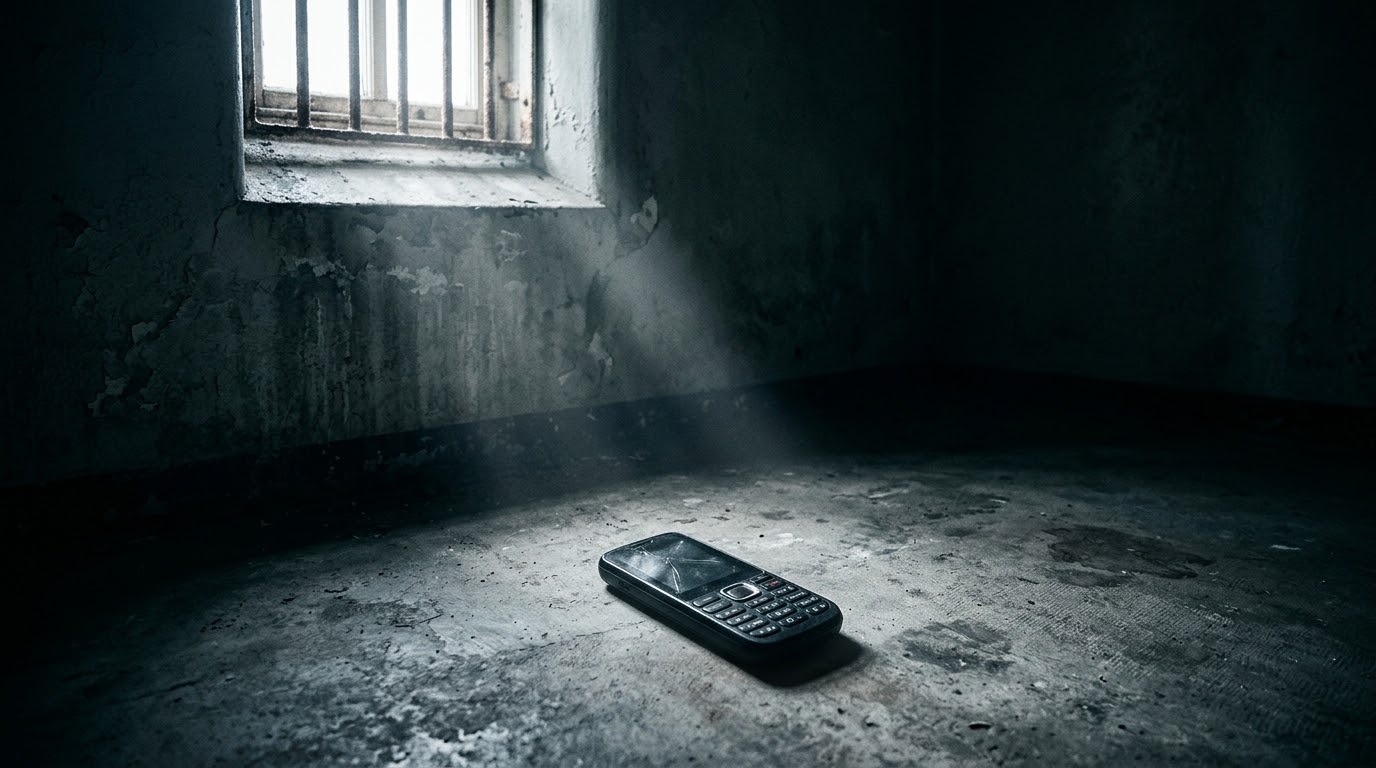
Imagine stealing a mobile phone on a night out, receiving a two-year prison sentence, and still being locked in a high-security cell 14 years later. Imagine a teenager punching someone in a street brawl and serving more than 16 years behind bars—longer than the mandatory tariffs handed down for many murders and manslaughters.
This is not a dystopian fiction or a miscarriage of justice from a bygone century. It is the active, daily reality inside Her Majesty’s Prison Service in 2026.
The Imprisonment for Public Protection (IPP)Imprisonment for Public Protection (IPP): An abolished indefinite prison sentence where offenders serve decades beyond their original tariff, trapped by a risk-averse Parole Board system. sentence—dubbed the "99-year sentence" by those trapped within it—was formally abolished by Parliament in 2012 after being declared unlawful by the European Court of Human Rights. Yet, because the government refused to apply the abolition retrospectively, thousands of British citizens remain incarcerated indefinitely for minor, non-violent offences.
Described by former Supreme Court Justice Lord Brown as "the greatest single stain on our criminal justice system" and condemned by the United Nations as state-sanctioned "psychological torture", the IPP sentence has created a self-reinforcing human rights catastrophe. It has wasted billions in public funds, filled overcrowded prisons, and destroyed hundreds of lives.
Does this sentence protect the public, or has it manufactured a Kafkaesque trap that breaks human minds? BRD Investigations examines the evidence.
The IPP Crisis in Numbers
- Total IPP Sentences Imposed (2005–2013): 8,711
- Total IPP Inmates in Custody Today: 2,271
- Unreleased Prisoners (Never Freed): 856 (99% past their court tariff)
- Recalled IPP Inmates in Prison: 1,415 (62.3% of total custody population)
- Recalls for Technical / Admin Breaches: Over 81% (No new crime committed)
- Self-Harm Rate Among IPP Inmates: 54% higher than general prison population
- In-Custody Suicides Since 2005: 94 to 96 IPP prisoners
- Cost to UK Taxpayers (2012–2022): £1.62 Billion (£53,801/year per inmate)
1. The Architecture of a Flawed Sentence: How the Trap Was Built
Introduced under Section 225 of Tony Blair's Criminal Justice Act 2003 and brought into force in April 2005 by then-Home Secretary Lord David Blunkett, the IPP sentence was pitched as a tough new measure for dangerous offenders. It was designed for individuals convicted of serious violent or sexual crimes who did not meet the legal threshold for a mandatory life sentence, but who were perceived to pose an ongoing future risk.
The Home Office initially predicted that the sentence would be used sparingly, capturing a core cohort of roughly 900 high-risk individuals.
Instead, flawed legislative drafting created a legal dragnet. Judges were stripped of discretion and legally compelled to hand down IPP sentences for minor, non-violent repeat offences—such as bicycle theft, vehicle interference, or minor street robberies—provided a qualifying prior conviction existed on record.
The Bipartite Mechanism: Tariff vs Indefinite Risk
An IPP sentence is split into two distinct parts:
- The Tariff: A minimum punitive custodial term set by the sentencing judge (often as short as 9 months to 2 years) reflecting the actual severity of the crime.
- Post-Tariff Indefinite Detention: Upon reaching the end of the tariff, the prisoner is not released. Instead, under Section 28 of the Crime (Sentences) Act 1997, they remain locked away until they can satisfy the Parole Board that they no longer pose a risk to the public.
This release test created an impossible reverse burden of proof. The state does not have to prove an inmate is dangerous; the incarcerated individual must prove a negative—that they are fundamentally safe.
To prove safety, prisoners were required to complete specific, accredited offending-behaviour courses. However, as thousands flooded the prison estate, the state failed to resource or provide these courses. Inmates reached their tariff expiration dates only to be told they could not be released because the required courses were unavailable in their facilities.
2. Jaw-Dropping Case Studies: Locked Away for Petty Theft
The disproportionality between the original crimes committed and the decades of incarceration served is staggering when compared directly to standard criminal tariffs.
| Individual | Original Offence | Court Tariff | Time Served in Prison |
|---|---|---|---|
| Thomas White | Stole a mobile phone (2012) | 2 Years | 14 Years (Still in) |
| Wayne Bell | Bicycle theft & punch (2007) | 2 Years | 16+ Years (Still in) |
| Martin Myers | Attempted cigarette theft | Indeterminate | 18 Years |
| Tommy Nicol | Stole a car (2009) | 4 Years | Died by suicide in prison post-tariff |
| Standard Comparison | Manslaughter / Severe Violence | 5 to 10 Years | Released on fixed date |
Thomas White: A 2-Year Sentence Turned 14-Year Nightmare
In 2012, 27-year-old Thomas White was struggling with alcohol misuse when he stole a mobile phone from two street missionaries in Manchester. He was handed a two-year minimum IPP tariff—just four months before the sentence was banned by Parliament.
Fourteen years later, Thomas remains incarcerated. Trapped in an unending void with no release date, he developed severe paranoid schizophrenia—a psychotic condition clinically diagnosed as having been directly induced by the trauma of indefinite detention. His mental state deteriorated to the point where he wandered his cell block wrapped in bedsheets, spoke to his family in Roman numerals, and suffered horrific self-harm. Shunted between 16 different prisons, he was repeatedly denied access to the rehabilitative courses required for his parole.
Wayne Bell: 16 Years for a Teenage Brawl
In 2007, 17-year-old Wayne Bell punched someone and stole a bicycle. He received a two-year tariff. He has now served over 16 years in prison—more than eight times his original court sentence. His case was explicitly highlighted by Dr Alice Jill Edwards, the UN Special Rapporteur on Torture, as an example of state-sanctioned cruelty.
While violent offenders who commit manslaughter routinely receive finite 5-to-10-year sentences and return home, minor IPP offenders remain buried alive inside the prison estate.
3. The Broken Parole & Recall Trap: Why Inmates Can’t Get Out
For the minority of IPP prisoners who manage to secure release, freedom is often an illusion. Under IPP terms, offenders are released on an indefinite, lifelong licence.
This has created the IPP Recall Trap. As of mid-2026, 62.3% of all IPP prisoners in custody (1,415 people) are recalled inmates.
Why IPP Inmates Are Recalled
81% Technical & Administrative Breaches (No new crime committed):
- Missing a probation appointment due to public transport delays
- Losing approved accommodation / becoming homeless
- Disclosing poor mental health or anxiety to an officer
- Minor rule infractions or non-compliance
19% New Offences:
- Suspected or proven re-offending
Research shows that over 81% of IPP recalls are triggered by minor administrative errors or mental health crises, not new criminal acts. An overworked probation officer facing a minor breach will often recall an IPP offender to prison out of extreme risk aversion. Once recalled, the inmate is thrust back into the indefinite prison system, where they must wait years for a new Parole Board hearing to prove their safety all over again.
4. Human Rights Violations, "IPP Syndrome", and Taxpayer Waste
The Mental Health Toll and "Psychic Pain"
Indefinite detention strips inmates of the basic human condition of hope. Forensic psychiatrists have documented the emergence of "IPP Syndrome"—a form of severe, institutional trauma marked by clinical paranoia, depression, helplessness, and psychotic breaks.
- Self-Harm: The rate of self-harm among IPP prisoners is 54% higher than in the general prison population, reaching 1,290 incidents per 1,000 prisoners.
- Suicides: At least 94 to 96 IPP prisoners have taken their own lives in prison since 2005. An additional 44 released IPP prisoners have committed suicide in the community under the weight of indefinite licence stress.
In the case of Tommy Nicol, who was jailed on a 4-year tariff for car theft, the psychological strain proved fatal. Nicol submitted desperate complaints describing IPP as "the psychological torture of a man doing 99 years" before ending his life in 2015. His family subsequently won a High Court settlement against the Ministry of Justice over state failures.
A £1.62 Billion Taxpayer Black Hole
Holding a prisoner in the UK costs an average of £53,801 per year. In 2024 alone, the British state spent £145.7 million detaining IPP prisoners. Between 2012 and 2022, UK taxpayers spent £1.62 BILLION maintaining a sentencing regime that Parliament had officially outlawed.
This vast expenditure comes at a time when British prisons are facing catastrophic overcrowding. While the government has introduced emergency early-release schemes (such as SDS40) to free determinate offenders after serving just 40% of their sentence to clear cell space, it continues to spend hundreds of millions holding minor IPP offenders decades past their court-mandated tariffs.
5. Political Paralysis: Regrets Without Action
Even the architect of the sentence, former Home Secretary Lord David Blunkett, has repeatedly admitted that devising the IPP sentence is his "biggest political regret".
"Whilst the principle behind IPP was correct, the crafting of the legislation and its implementation has resulted in deeply damaging outcomes... It is the biggest regret I have in my eight years in government."
— Lord David Blunkett, former Home Secretary
Despite damning verdicts from the European Court of Human Rights, the House of Commons Justice Select Committee, and the UN Special Rapporteur on Torture, successive UK governments have refused to perform a retrospective resentencing exercise.
While recent legislative measures in the Victims and Prisoners Act 2024 reduced licence review periods from 10 years to 3 years for rehabilitated people in the community—cancelling roughly 1,800 community licences—they did nothing to free the 856 unreleased prisoners or the 1,415 recalled inmates languishing inside prison cells.
Conclusion & Call to Action: Restoring the Rule of Law
The IPP sentence is an irredeemable stain on British justice. A state that can legally disappear its citizens for stealing a bicycle or a mobile phone, trapping them in endless psychological deterioration while burning billions in public funds, has abandoned proportional justice.
A banned sentence cannot rehabilitate. True public safety is not achieved by psychologically destroying human beings in overcrowded cells; it is achieved through structured, community-based rehabilitation and judicial fairness.
Parliament must heed the calls of judicial experts, human rights bodies, and cross-party campaigners by enacting a comprehensive retrospective resentencing review.
Follow BRD Investigations for ongoing coverage, legal updates, and unvarnished investigative reporting.


Comments
Post a Comment